Telusur
A MacOS application that accelerates lost-and-found cases by identifying people through CCTV footage.
Overview
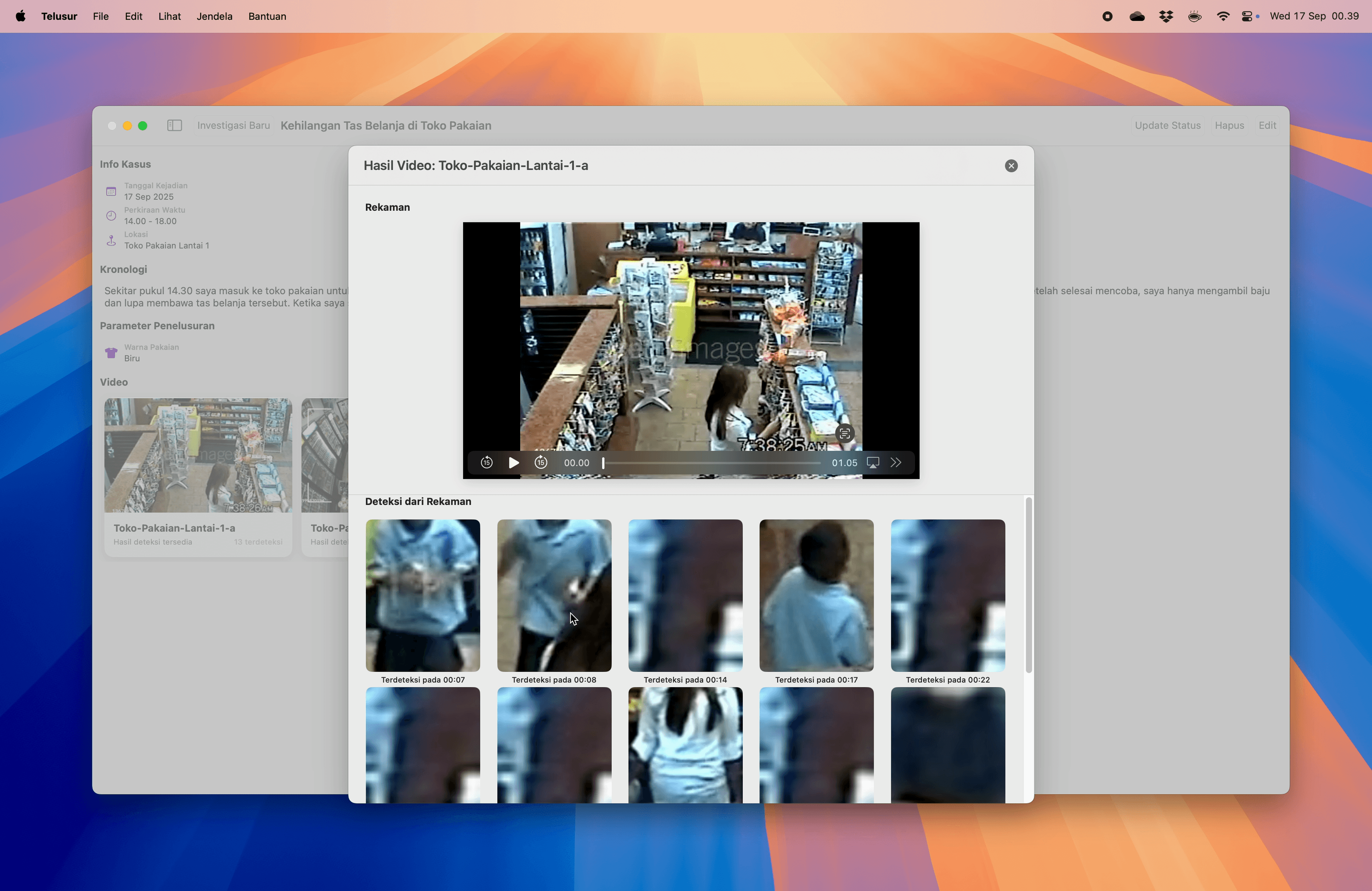
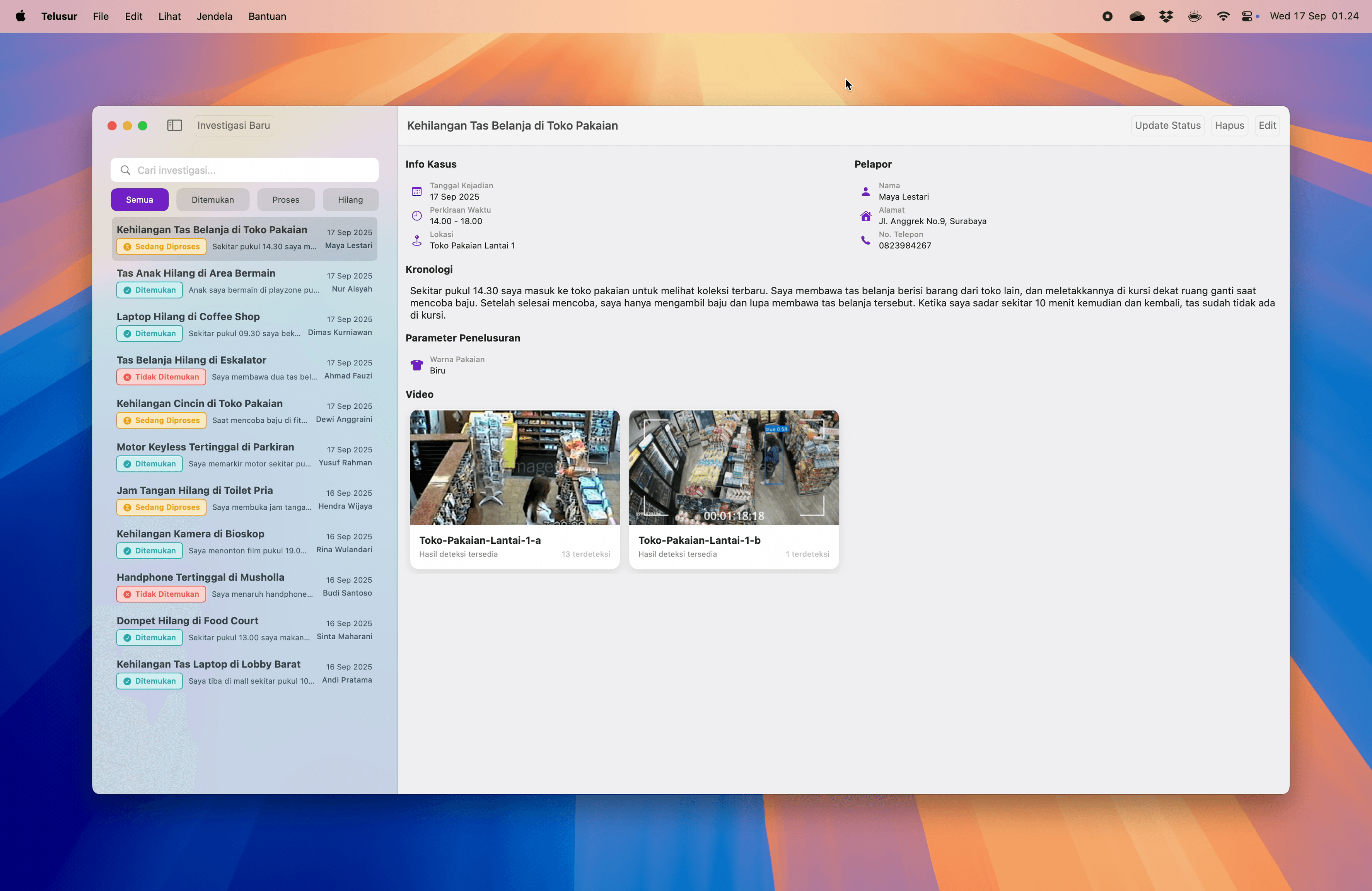
Telusur is a MacOS application designed to help security teams locate individuals more efficiently during lost-and-found cases. Typically, the security process begins by tracing (“telusur”) a person’s movement from the moment they first appear on CCTV footage. This manual tracking is time-consuming and often slows down decision-making.
Telusur streamlines this process by helping security teams quickly identify where a person first appears in the footage. With this insight, the team can trace their path faster, respond more effectively, and resolve cases with greater accuracy.
Project Goals
This project originated from our collaboration with Ciputra World during our time at the Apple Developer Academy. After conducting surveys and interviews with their security division, we discovered a clear opportunity to improve their lost-and-found workflow.
Our goal was to develop a solution that reduces the time required to trace individuals, ultimately improving operational efficiency and enhancing the overall visitor experience. Through Telusur, we aimed to create a tool that not only assists security teams but also reflects positively on the mall’s customer service quality.
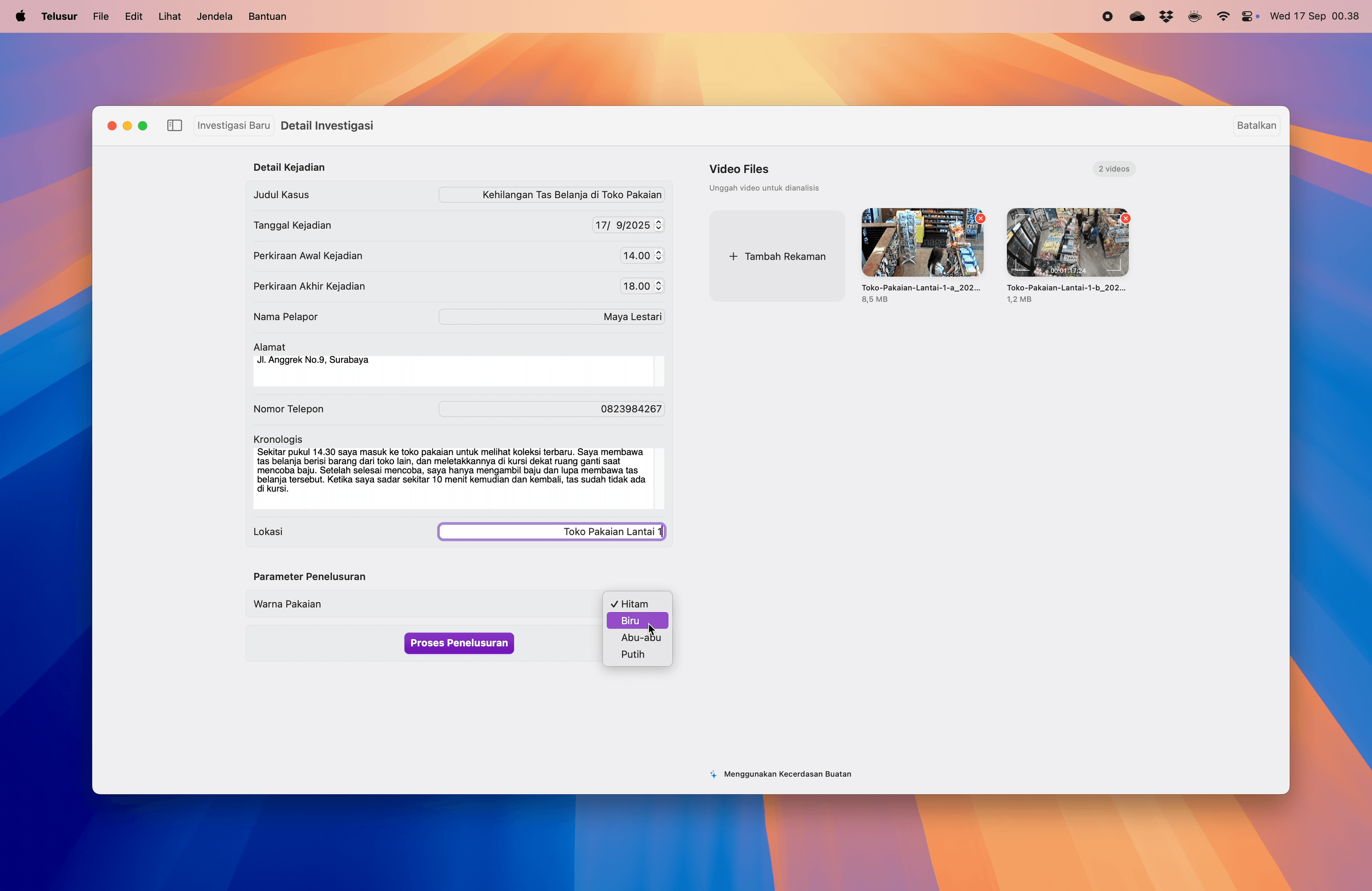
Screenshots
Challenges and How We Overcame Them
One of our major challenges was building and integrating the AI model into the MacOS environment. We implemented a two-layer YOLO system:
- The first layer detects people.
- The second layer identifies attributes such as clothing and colors.
With limited time, we realized we needed to reduce our scope. We focused solely on clothing color detection to ensure we could deliver a reliable MVP. Even then, the process wasn’t smooth—many packages and libraries behaved differently on MacOS compared to iOS, despite both using Swift.
Another challenge involved integrating with existing CCTV systems. Initially, we tried using simple file transfers, but this approach was impractical because CCTV videos are large and heavy. Constant copying and pasting would be slow and inefficient.
Our proposed solution was to create a separate backend that could be installed directly on the CCTV server. This would allow the AI to process videos locally without manual transfers. Due to time and resource constraints, we were unable to complete full integration with a real CCTV server, but the solution remains feasible for future development.
Learnings
This project taught me a great deal—both technically and non-technically. Technically, it was my first experience integrating computer vision models into an application. Building, optimizing, and connecting the model to the app gave me valuable insights into designing codebases that support AI workflows.
On the non-technical side, I learned the importance of clarity and communication within the team. Since AI development was new for all of us, staying aligned and making sure everyone understood the direction was crucial. Our shared eagerness to learn made the experience rewarding and kept us moving forward despite the challenges.
Attributions
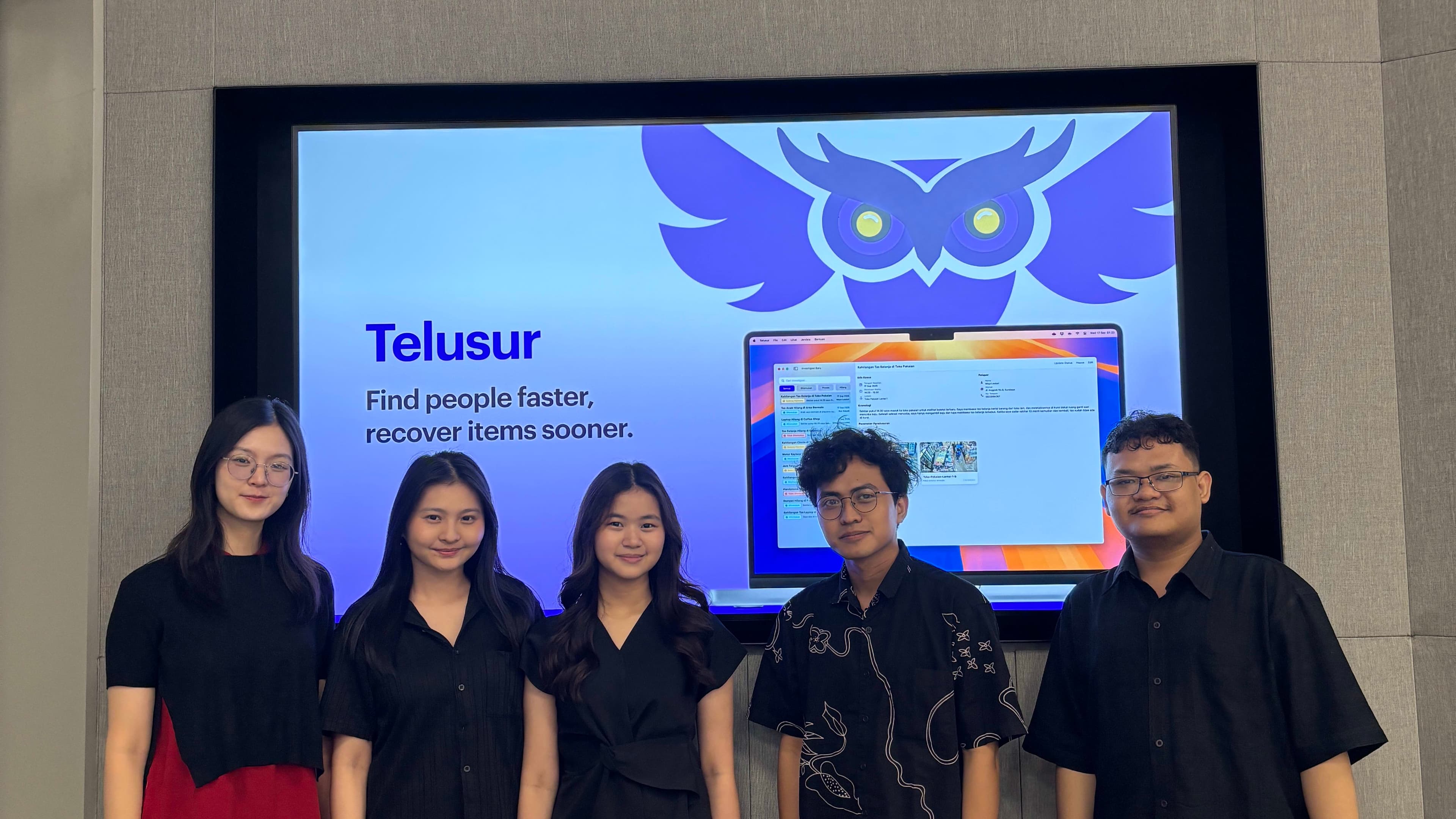
From Left to Right:
- Joycelyn Eugenia Kurniadi: Designer & Project Manager
- Celinka Eira Jove: MacOS Developer
- Tjok Istri Vicky Savitri: MacOS Developer
- Java Kanaya Prada: MacOS Developer & AI Engineer
- Ali Ahmad Fahrezy: MacOS Developer & AI Engineer